As the autumn equinox approached, I went to the Berkeley Farmers' Market
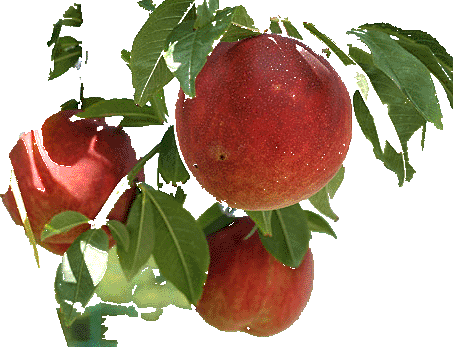
on a foggy Saturday morning. When I passed by the Frog Hollow fruit stand I saw
that there were peaches for $2.50 a pound. I asked a helper there if this was the
last week for peaches and began to load up a brown bag, six, seven, eight, taking
small ones as well as large ones, pointing out a seriously moldy peach to the helper to remove.
They made it home with some slight bruising. I ate one in my breakfast the next morning,
crumbling some leftover wholegrain cornbread into a bowl, filling it up with milk, adding peach
slices and microwaving the whole thing, covered, for two minutes. It was good, the milk softening
the cornbread. But this morning I returned to my iconic summer 2010 recipe.
I read in a brand new cookbook about eating polenta with mascarpone and blackberries. I don't
keep mascarpone around the house, but I have been cooking oatmeal in one-percent milk for a couple
of years to insure that I get enough calcium. When the weather gets cold, I take a cup of milk, half a cup
of rolled oats, a bit of kosher salt, perhaps three or four dried apricots cut into little bits with scissors and
cook it up in a saucepan. This summer I decided to try it with polenta instead: I measured a quarter-cup of
bright, coarse-textured polenta and added it to the cup of milk, added salt and began to heat it over high
medium heat. While it was starting to cook I sliced up a fresh peach and put it in my cereal bowl, glancing
back over my shoulder to watch the polenta pot. Much stirring later, after the polenta had begun to boil, I
reduced the heat. I added a capful of vanilla extract because vanilla enhances the flavor of corn and the
sweetness of the cereal and then poured the warm mass on top of my peach slices. The hot polenta softens
and warms the peaches and the whole thing is like a bowl of sunshine in two shades of orange and yellow.
The surprise was that with a ripe peach in the bottom of the bowl, the dish needed no sugar at all to be delicious.
And who would have thought that coarse polenta would turn creamy when cooked in milk?
I ate that breakfast all peach season. I also tried it with wild blackberries gathered in the hills of Orinda and
olallieberries from the Berkeley market.
The economic downturn has taken its toll: I am unemployed this summer. In summers past I would buy a flat
of Frog Hollow peaches at the beginning of the season and another flat at the end. We would eat peach waffles and
peach-rum bread pudding. I would make peach-sicles in plastic molds leftover from my childhood and freeze peach
puree. This year I never bought a flat, but selected a few peaches carefully every time I saw them. It may be that I
savored them more.
In the winter, we will make pies and cobblers from frozen peaches kindly stocked by Canned Foods Grocery Outlet.
The CSA at Riverdog Farm will occasionally present us with dried peaches, which don't retain much of peach perfume or
flavor, compared with successfully dried apricots, apples or pears. There are lovely green figs in the market now and
I bought a basket of red raspberries the other day, but peach season is passing for another year, my polenta is eaten,
the coffee cools at my side.
Breakfast Polenta with Peaches
Slice 1 ripe peach into your cereal bowl
Film a saucepan with a little water
Measure I cup milk
1/4 cup polenta
salt to taste
into your saucepan.
Heat over medium-high heat, stirring as needed, until mixture comes to a boil. Lower heat and cook until it is as
thick as you like.
Add 1 teaspoon of vanilla extract
and pour the polenta over your peaches in the bowl. Pick up
your spoon and taste summer.
Notes:
Peaches are ripe when they are soft. The heat will soften a peach a little bit, but please let hard, green peaches
soften on the counter before you try this dish, or, better yet, buy your peaches ripe, local and in season. Here in
California peach season is roughly from mid-June through September. If you live elsewhere look for a guide to the
local food seasons or speak to someone who grows food.
You can use any kind of milk. One percent keeps the calories down; if you use whole milk, it will be richer. I don't cook
with skim milk because to me it has no milk flavor left.
Please use real vanilla extract. It is expensive, but a little goes a long way. Imitation vanilla will produce an off-flavor
in a simple dish like this. As a zen teacher said once, choose the best that is available to you -- that doesn't mean buy a
two-hundred dollar bottle of vanilla if you are not rich, it means spring for real vanilla if you possibly can. If you can't get real
vanilla, you could leave it out.
Sharyn in Kensington, CA